See my complete review here on Yahoo! Voices.
Book Review: 'Above World' by Jenn Reese
Above World by Jenn Reese is the first book in a new series for young adults and middle school
aged children. The world is one ravaged by over population, greed, and
technology. The population have been genetically and technically altered
to survive in a variety of previously inhospitable terrains.
Thirteen-year-old Aluna lives in the water, with a special shell that
helps her breath and the promise of growing a tail after a traditional
coming of age rite.
See my complete review here on Yahoo! Voices.
Early Book Review: Goddess Interrupted by Aimee Carter
Goddess Interrupted by Aimee Carter is the sequel to the young adult novel The Goddess Test. It is scheduled for release on March 27 2012. In The Goddess Test, Kate Winters won immortality, which was supposed to be the hard part. Now she is returning to Henry's side, joining him in the Underworld, in order to take her place as Queen. However, it seems that she will have to fight to keep what she holds dear. Calliope is still holding a grudge and will stop at nothing to destroy Kate, even if it means destroying the world itself by releasing the King of the Titans. Kate is unsure of Henry's feelings, her abilities, and her place in the world but is still willing to risk everything to save Henry's life. She will even seek the help of Persephone, the one person that she feels might threaten her relationship with Henry.
First, I need to say that I adored The Goddess Test. I am a fan of retellings and twisting of mythology when done well. Goddess Interrupted had much potential, and met most of it. However, I need to admit that I was a little disappointed with it. The action scenes were great, I wish there were more of them. The big picture, the crisis, and the battles were all fantastic. I really liked getting some more back story on the complicated relationships between some of the characters.
However, in Goddess Interrupted my love for the impetuous Kate faded a little. She is still smart, and compassionate, and understanding. But she fell into the Bella trap. Those that read Twilight and disliked it, or read it and loved it but then slowly grew to dislike Bella will understand immediately. It seemed like Kate spent the majority of the book wondering what she had done wrong, what was wrong with her, and whether Henry loved her. It got to the point that I started skimming the introspections and sharing her insecurities about being loved and starting paying attention when three or more people were part of the scene. Then there was the cliffhanger ending. This is starting to become a pet peeve of mine because it seems to happen more and more often lately. I do not mind a hook that leaves me wanting to read the next book to find out what happens next, that is important to keep a series interesting. However, when I finish a book I do not like feeling like the last chapter of the book is missing.
So, you might think that I did not like Goddess Interrupted after those complaints, but that is not true. I liked it, but I just did not love it. I think part of my disappointment came from the fact that I had so much hope for this book, that reality simply fell short of my high expectations. I am glad that I read it, and if I have access to the galley of the next installment I will read it, but it will not be on my to buy list.
First, I need to say that I adored The Goddess Test. I am a fan of retellings and twisting of mythology when done well. Goddess Interrupted had much potential, and met most of it. However, I need to admit that I was a little disappointed with it. The action scenes were great, I wish there were more of them. The big picture, the crisis, and the battles were all fantastic. I really liked getting some more back story on the complicated relationships between some of the characters.
However, in Goddess Interrupted my love for the impetuous Kate faded a little. She is still smart, and compassionate, and understanding. But she fell into the Bella trap. Those that read Twilight and disliked it, or read it and loved it but then slowly grew to dislike Bella will understand immediately. It seemed like Kate spent the majority of the book wondering what she had done wrong, what was wrong with her, and whether Henry loved her. It got to the point that I started skimming the introspections and sharing her insecurities about being loved and starting paying attention when three or more people were part of the scene. Then there was the cliffhanger ending. This is starting to become a pet peeve of mine because it seems to happen more and more often lately. I do not mind a hook that leaves me wanting to read the next book to find out what happens next, that is important to keep a series interesting. However, when I finish a book I do not like feeling like the last chapter of the book is missing.
So, you might think that I did not like Goddess Interrupted after those complaints, but that is not true. I liked it, but I just did not love it. I think part of my disappointment came from the fact that I had so much hope for this book, that reality simply fell short of my high expectations. I am glad that I read it, and if I have access to the galley of the next installment I will read it, but it will not be on my to buy list.
Early Book Review: The Star Shard by Frederic S. Durbin
The Star Shard by Frederic S. Durbin is a wonderful fantasy novel
for children around eleven to fourteen. However, older and younger
children, and adults, can enjoy this book as well. It is due to be
released on February 28 2012. The story follows twelve year old Cymbril,
a singing slave on board a traveling city called the Thunder Rake. The
city is essentially a traveling market on a giant wagon city, hiding
more floors and rooms than even its residents know. When another slave is brought
on board, the fey boy Loric, Cymbril becomes more aware of her captivity
and strives to gain freedom for both of them. The Star Shard introduces
a brilliant new fantasy world, and I am eager to see this story
continue on in future books.
See my complete review here on Yahoo! Voices.
Picturebook Review: Rosie Sprout's Time to Shine
Rosie Sprout's Time to Shine, written by Allison Wortche
and Patrice Barton (Illustrator), is a great book for children that
often feel out-shined by the louder students. Rosie is a nice girl.
However, her classmate Violet seems to be the best at everything. Violet
is the fastest runner, highest singer in chorus, dresses the fanciest,
and of course talks the loudest. The entire class seems to agree that
Violet is simply the best. Rosie disagrees; but she cannot seem to top
anything that Violet does. When it is time for the class to grow plants
Rosie is determined to be the best gardener. Her pea plant and Violet's
plant spout on the very same day. Rosie tries to cover Violet's with
dirt, but when she is out sick from school Rosie feels guilty and tends
to both plants. Rosie treats Violet's plant with the same love and care
that she gives her own. Soon both plants are the tallest in the room and
the teacher declares Rosie the best gardener that she has ever had in
class. When Violet returns to school she is thrilled that her plant is
the tallest. After a brief tank you to Rosie, she continues on her way
describing how she had the worst chicken pox ever. Rosie and her teacher
share a smile, and Rosie is happy with being the best gardener and a
good person.
Rosie Sprout's Time to Shine speaks to me, because I often feel like Rosie. Always doing my best and working my hardest to be the best me I can. However, it is often the loudest and most outgoing that gather the praise and adulation of those around them. It can get discouraging to the best of us. What I really like about this book is that Violet is not a mean girl, she is just self-centered, which is not unusual. Rosie is not a saint, she is a real girl dealing with real feelings and is offered no perfect solution. In the end the book ends with a bittersweet acknowledgement that this sort of conflict will continue to happen. There is no pat answer, with the main character receiving more than the praise do a job well done. It is something that can and will happen in real life, with Rosie taking the best route to being who she is, and a good person. The illustrations by Barton are beautiful and frankly adorable. They perfectly match the mood and lessons of the story.
I recommend Rosie Sprout's Time to Shine to children in preschool, kindergarten, and older. It would be a great story for the classroom, for either character conversations or before an introduction to the science of seeds. Both of my children are already more outspoken than myself, so the story of a shy child did not quite hold with them as much as it did me. However, they still enjoyed the story and wanted to grow plants of their own as soon as we finished the book.
Rosie Sprout's Time to Shine speaks to me, because I often feel like Rosie. Always doing my best and working my hardest to be the best me I can. However, it is often the loudest and most outgoing that gather the praise and adulation of those around them. It can get discouraging to the best of us. What I really like about this book is that Violet is not a mean girl, she is just self-centered, which is not unusual. Rosie is not a saint, she is a real girl dealing with real feelings and is offered no perfect solution. In the end the book ends with a bittersweet acknowledgement that this sort of conflict will continue to happen. There is no pat answer, with the main character receiving more than the praise do a job well done. It is something that can and will happen in real life, with Rosie taking the best route to being who she is, and a good person. The illustrations by Barton are beautiful and frankly adorable. They perfectly match the mood and lessons of the story.
I recommend Rosie Sprout's Time to Shine to children in preschool, kindergarten, and older. It would be a great story for the classroom, for either character conversations or before an introduction to the science of seeds. Both of my children are already more outspoken than myself, so the story of a shy child did not quite hold with them as much as it did me. However, they still enjoyed the story and wanted to grow plants of their own as soon as we finished the book.
Guest Blog: 7 Ways to Encourage Reluctant Readers
Guest Blogger: Steve
Reifman, author of Chase Against Time.
Reading is a tremendously appealing, satisfying activity, and children will become hooked once the adults in their lives consistently build it into their daily schedules. The key is getting children started. The following seven strategies will help even the most reluctant reader become more enthusiastic about the endeavor. By employing the strategies described below, reading will become something that students do willingly, even eagerly, and the adults in their lives will not have to resort to trickery, bribery, manipulation, or any other tactic that will, at best, lead to temporary compliance. After all, we’re striving to make reading a joyous lifelong habit.
1) Start with the child’s passions. Children will be more excited about reading when they can choose books or magazines related to their interests. This suggestion is far and away the most powerful one when it comes to encouraging those who are reluctant to read. When kids own the choice of what they will read, motivation increases significantly.
2) Make reading a social experience. Children who don’t enjoy reading alone often enjoy reading with somebody else. Children can read with their parents, siblings, other relatives, and friends. Some children even start mini-book clubs and discuss books related to their common interests. Asking children to read to their younger siblings and cousins can powerfully impact their own motivation to read.
3) Read aloud to children. Many parents regularly read aloud to their children when they are very young, yet stop this activity as the kids get older. Parents should read aloud to children throughout the elementary grades. Doing so makes reading more enjoyable, improves listening skills, builds comprehension, lengthens attention spans, and grows the imagination.
4) Take advantage of new technology. Children who may not find books interesting may enjoy reading the same texts on smart phones, computers, and electronic readers, such as the iPad or Kindle. Technology makes everything seem cooler and more engaging to children, and we should capitalize on this fact when it comes to reading.
5) Be a role model to children. When children see their parents reading frequently, discussing what they have read, and carrying books around, they will value reading to a greater extent. The power of modeling cannot be underestimated.
6) Camouflage reading. Parents can increase the amount of time their children spend reading by subtly building the activity into other, seemingly unrelated activities. Examples include reading menus at restaurants, reading the directions to board games, and looking at various websites together. Children who may not yet enjoy reading for its own sake may enjoy it tremendously when it’s incorporated into other engaging pastimes.
7) Be sure children read books that are appropriately challenging. Many times kids don’t want to read simply because the books they encounter are too difficult. This seemingly obvious point is frequently forgotten. None of us want to encounter frustration, and we will go to great lengths to avoid experiences that make us feel this way. Appropriately challenging books are those in which students can fluently read approximately 95% of the words. Encountering a small number of difficult words can help children grow in their reading skills, but encountering too many of these words can interfere with fluency and lead to discouragement.
Commit to trying one or more these ideas to help your child become a more enthusiastic reader. Teaching the whole child means that we focus on developing children’s academic skills, but just as important, we focus on children’s attitudes about these skills. We want to raise children who read well and read because they want to do it, not because they have to do it.
Steve Reifman is a National Board Certified elementary school teacher, author, and speaker in Santa Monica, CA. He has written several books for educators and parents, including Changing Kids’ Lives One Quote at a Time and Eight Essentials for Empowered Teaching and Learning, K-8. Steve is also the creator of the Chase Manning Mystery Series for kids 8-12. Each book in the series features a single-day, real-time thriller that occurs on an elementary school campus. For weekly Teaching Tips, blog posts, and other valuable resources and strategies on teaching the whole child, visit http://stevereifman.com. You can follow Steve on Twitter at http://twitter.com/#!/stevereifman.
7 Ways to Encourage Reluctant Readers
1) Start with the child’s passions. Children will be more excited about reading when they can choose books or magazines related to their interests. This suggestion is far and away the most powerful one when it comes to encouraging those who are reluctant to read. When kids own the choice of what they will read, motivation increases significantly.
2) Make reading a social experience. Children who don’t enjoy reading alone often enjoy reading with somebody else. Children can read with their parents, siblings, other relatives, and friends. Some children even start mini-book clubs and discuss books related to their common interests. Asking children to read to their younger siblings and cousins can powerfully impact their own motivation to read.
3) Read aloud to children. Many parents regularly read aloud to their children when they are very young, yet stop this activity as the kids get older. Parents should read aloud to children throughout the elementary grades. Doing so makes reading more enjoyable, improves listening skills, builds comprehension, lengthens attention spans, and grows the imagination.
4) Take advantage of new technology. Children who may not find books interesting may enjoy reading the same texts on smart phones, computers, and electronic readers, such as the iPad or Kindle. Technology makes everything seem cooler and more engaging to children, and we should capitalize on this fact when it comes to reading.
5) Be a role model to children. When children see their parents reading frequently, discussing what they have read, and carrying books around, they will value reading to a greater extent. The power of modeling cannot be underestimated.
6) Camouflage reading. Parents can increase the amount of time their children spend reading by subtly building the activity into other, seemingly unrelated activities. Examples include reading menus at restaurants, reading the directions to board games, and looking at various websites together. Children who may not yet enjoy reading for its own sake may enjoy it tremendously when it’s incorporated into other engaging pastimes.
7) Be sure children read books that are appropriately challenging. Many times kids don’t want to read simply because the books they encounter are too difficult. This seemingly obvious point is frequently forgotten. None of us want to encounter frustration, and we will go to great lengths to avoid experiences that make us feel this way. Appropriately challenging books are those in which students can fluently read approximately 95% of the words. Encountering a small number of difficult words can help children grow in their reading skills, but encountering too many of these words can interfere with fluency and lead to discouragement.
Commit to trying one or more these ideas to help your child become a more enthusiastic reader. Teaching the whole child means that we focus on developing children’s academic skills, but just as important, we focus on children’s attitudes about these skills. We want to raise children who read well and read because they want to do it, not because they have to do it.
Steve Reifman is a National Board Certified elementary school teacher, author, and speaker in Santa Monica, CA. He has written several books for educators and parents, including Changing Kids’ Lives One Quote at a Time and Eight Essentials for Empowered Teaching and Learning, K-8. Steve is also the creator of the Chase Manning Mystery Series for kids 8-12. Each book in the series features a single-day, real-time thriller that occurs on an elementary school campus. For weekly Teaching Tips, blog posts, and other valuable resources and strategies on teaching the whole child, visit http://stevereifman.com. You can follow Steve on Twitter at http://twitter.com/#!/stevereifman.
Early Book Review: "Chase Against Time" by Steve Reifman
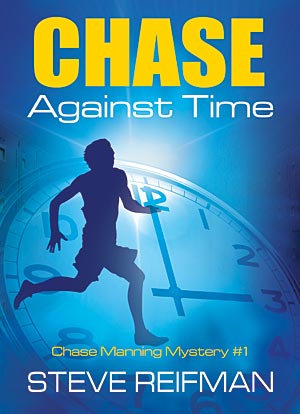
Chase Against Time by Steve Reifman is a children's chapter book due for re-release on March 15 2012. Chase Against Time
follows one forth grader, Chase Manning, who wants to play in the
honor's orchestra in the next school year. However, the award winning
music program is at risk, and can be saved if a charity auction for a
special cello can earn enough money. When that cello disappears from its
case everything is at risk. Before he knows it, Chase is on the case,
in search for the culprit. Is the thief a fellow student, the angry
coach, or someone completely unexpected. Friendships are put to the test
and surprises abound as Chase investigates. Can he solve the mystery
and still find time to practice his audition piece for the now at risk
orchestra?
See the complete review here on Yahoo! Voices.
Early Book Review: Castle of Shadows by Ellen Renner
Castle of Shadows by Ellen Renner is a children's book for ages nine through the early teens. It is scheduled for release on March 20 2012. In Castle of Shadows, the kingdom of Quale is in serious trouble. There are rumors and plots on the streets about revolution. The problem begins five years before the action of the book begins, when the queen vanishes. Some think that the king has killed her, but everyone close to the the castle knows that it is not true. The queen has run away, leaving everyone she cares about behind. The Prime Minister is running the country, and the housekeeper is running the castle. Charlie, or Charlotte, is the princess. The housekeeper mistreats her, the King is lost in a haze of grief, and there are agendas at work. When Charlie discovers a letter her mother wrote before she left, Charlie is desperate for answers. She sets out on a quest with the gardener and her occasional adversary Tobias to find out the truth about why her mother left, and where she might have gone. Soon the danger has doubled and Charlie does not know who she can trust, and where she should turn. Can she manage to save her father, the kingdom, and herself?
I am struggling with my review of Castle of Shadows, there were many elements I loved, and still it felt that something was lacking. So lets start with the good, and then I will try to figure out what bothered me about the book. I liked the character of Charlie, she is resourceful and persistent. She was a little out of control, but her attitude and perceptions fit with a child in her position. I really like Tobias's character and would have like to see even more of him in the book. I will say that I fully expected another twist of who could be trusted by the end of the book, but it did not happen. However, the final scene with the king was unexpected and the perfect choice for the plot. The introduction of political intrigue into Charlie's life worked, and flowed well. I genuinely enjoyed large portions of the story, and found it to be an interesting and entertaining read.
Perhaps my problem with Castle of Shadows lies with the missing queen. As a mother, I cannot even contemplate leaving behind a child, especially if I distrusted the intent of the adults that would surround her. Maybe my questioning of the queen is part of the brilliance of the book, leaving me to wonder if Charlie would be safe in her own mother's arms. My disconnect with the book could also be because of the sheer evil of the villains of the book. I think my real issue is that the book has so much promise. The ideas and story could have been fantastic, and I was left with the vague sort of 'that's it?' running through my mind. There were definitely moments of pure brilliance in the book, unfortunately there were also moments that had me putting it aside to do the household chores that needed doing.
I am glad that I read Castle of Shadows, but I do not think I will be following it up with other works from the author quite yet. I think that Renner has the potential to be a wonderful writer. However, I do not think that the potential has been fully realized yet. I do think that there are many readers in the target age range that would enjoy this book, but there are some heavy themes and violence to be found. While the reading aspects would be easy handled by an eight or nine year old, because of the violence and general mistreatment of people in the book I would lean towards offering it to readers around thirteen years old or more.
I am struggling with my review of Castle of Shadows, there were many elements I loved, and still it felt that something was lacking. So lets start with the good, and then I will try to figure out what bothered me about the book. I liked the character of Charlie, she is resourceful and persistent. She was a little out of control, but her attitude and perceptions fit with a child in her position. I really like Tobias's character and would have like to see even more of him in the book. I will say that I fully expected another twist of who could be trusted by the end of the book, but it did not happen. However, the final scene with the king was unexpected and the perfect choice for the plot. The introduction of political intrigue into Charlie's life worked, and flowed well. I genuinely enjoyed large portions of the story, and found it to be an interesting and entertaining read.
Perhaps my problem with Castle of Shadows lies with the missing queen. As a mother, I cannot even contemplate leaving behind a child, especially if I distrusted the intent of the adults that would surround her. Maybe my questioning of the queen is part of the brilliance of the book, leaving me to wonder if Charlie would be safe in her own mother's arms. My disconnect with the book could also be because of the sheer evil of the villains of the book. I think my real issue is that the book has so much promise. The ideas and story could have been fantastic, and I was left with the vague sort of 'that's it?' running through my mind. There were definitely moments of pure brilliance in the book, unfortunately there were also moments that had me putting it aside to do the household chores that needed doing.
I am glad that I read Castle of Shadows, but I do not think I will be following it up with other works from the author quite yet. I think that Renner has the potential to be a wonderful writer. However, I do not think that the potential has been fully realized yet. I do think that there are many readers in the target age range that would enjoy this book, but there are some heavy themes and violence to be found. While the reading aspects would be easy handled by an eight or nine year old, because of the violence and general mistreatment of people in the book I would lean towards offering it to readers around thirteen years old or more.
Picturebook Review: The Library Pages by Carlene Morton and Valeria Docampo
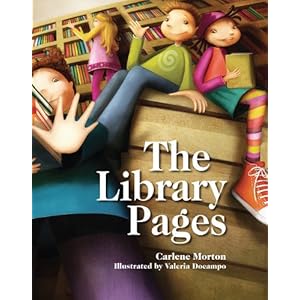
The Library Pages is a wonderful picturebook for introducing library etiquette. It is written by Carlene Morton and illustrated by Valeria Docampo. The book starts with Mrs. Health, an elementary school librarian home on maternity leave, receiving a letter and video in the mail from her students. The students let her know how much they miss her, and the video details how they have helped the substitute out after being given the roles of library pages. While the substitute snores in her chair, the video shows the students shelving the books by color, in patterns, mending with colored duct tape, and various other 'helpful' functions that have Mrs. Heath ready to race back to the school to set things right. Just before she picks up the phone, the students pop up on the screen and shout "April Fools".
As a librarian, I felt Mrs. Heath's horror at each of the student's examples of how they have been helping in the library. The Library Pages filled me with horror, and the urge to giggle at the same time. The idea of mending with colored tape, or lending books without checking them out, or sniping out animal illustrations for art projects, causes he to shudder. They are some of the deepest fears for many a librarian, regardless of if they work in a school or public library. The playful and bright illustrations lead you to the hope that it is a joke before the prank is revealed, but it does not spoil the reveal. The book is highly entertaining and is a great book for opening up a discussion on how books should be treated, at home or in the library.
I recommend The Library Pages to anyone about to train young library helpers, and anyone that wants to help show children how to handle books. It is playful while still driving home the lessons that books should be treated with care.
Book Review: Raven Calls by C. E. Murphy
Raven Calls
by C. E. Murphy is the most recent addition to Murphy's Walker Papers
series. This just might be the best book in the series thus far, with
action and character growth far exceeding even what this fan
expected. Raven Calls picks up right on the heels of Spirit
Dances. Joanne is tired, hungry, and suffering from a werewolf
bite. She also quit her job, and solidified her relationship with her
former boss, Morrison. Her encore performance includes flying off to
Ireland to follow the mystical pull that tells her that she has some
unfinished business in her late mother's homeland. While Joanne has
made some serious strides, the werewolf bite that is plaguing her
just might be the least of her problems. Even with the unexpected
help from Gary, her powers and skills might not be enough to deal
with the ancient powers that reside in Ireland.
Raven Calls
chronicles Joanne's mission to wrap up the unfinished business she
has with her late mother, and the evil force that everyone simply
calls The Master. While struggling to stay non-furry; Joanne
encounters gods, goddesses, and beings that she can not quite
classify. Her mission is to battle the darkness, The Master, while
setting her mother's essence free from his influence. Her efforts
take her, and those she encounters along the was, slipping through
time and closing some complicated time loops. While the journey takes
some turns that Joanne does not expect, and sets the stage for
further adventures. However, although her path might not be a
straight line, Joanne comes a long way in accepting herself and the
world around her for all of its light and dark.
I highly recommend
Raven Calls to fans of the Walker Papers series. For those
that have yet to read the first six books in the series, I do not
recommend starting here. Without the previous knowledge of Joanne,
her issues, her friends, and her family you will simply not
understand the significance of most of the story line and the growth
that Joanne's character makes. I do recommend the entire series, it
is a great example of urban fantasy that balances the action,
personal growth, and romance plot lines of the characters well. This
is one series that I refuse to fall behind on.
Picturebook Review: I'm a Shark by Bob Shea
I'm a Shark by Bob Shea is a fun and boldly illustrated book about an arrogant shark that proclaims that he is not afraid of anything. He continually tells two, much smaller, admirers that he is brave and not afraid of anything. He proclaims that most of the scariest things in the world are actually afraid of him. He is not afraid of the dark, a giant squid, or a big mean bear. Before long readers, young and old, are well aware of the one thing that scares shark, even though he will not admit it. Even the awesome shark is afraid of something, and his small fans are afraid of something too.
I am a fan of Bob Shea. The combination of his big, bold illustrations and fun text make reading his books a joy. I will admit to enjoying them well before sharing them with my children. I'm a Shark is no exception. The boastful shark is a great lesson for children, both in the fact that is alright to be afraid and in recognizing that everyone is afraid of something. Even the biggest, baddest, smartest, strongest, most whatever is important to them, is afraid of something. In some cases the fear is justified, or at least something that has a purpose, like a small fish being afraid of a shark. However, sometimes even the bravest among us are afraid of the little things that can truly cause us no harm. I was glad that the shark was afraid of something as simple as spiders, it will make my own dislike of clowns and porcelain dolls much easier to explain to my children when the time comes. (They are both just creepy.)
I highly recommend I'm a Shark to all picturebook readers and listeners.
Subscribe to:
Comments (Atom)